How Beijing residents actually ride — and what that says about which streets are built for bikes.
Background
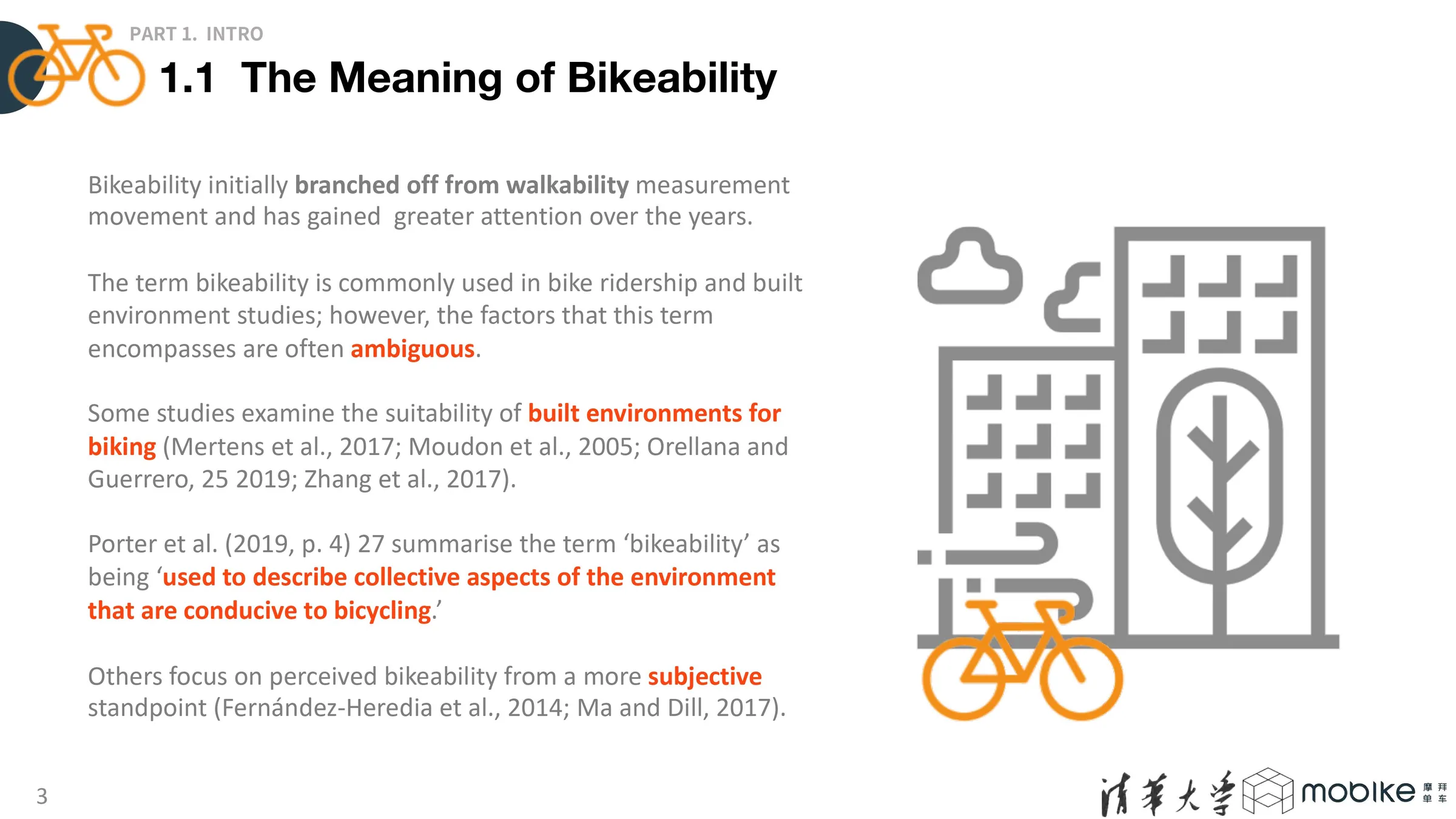
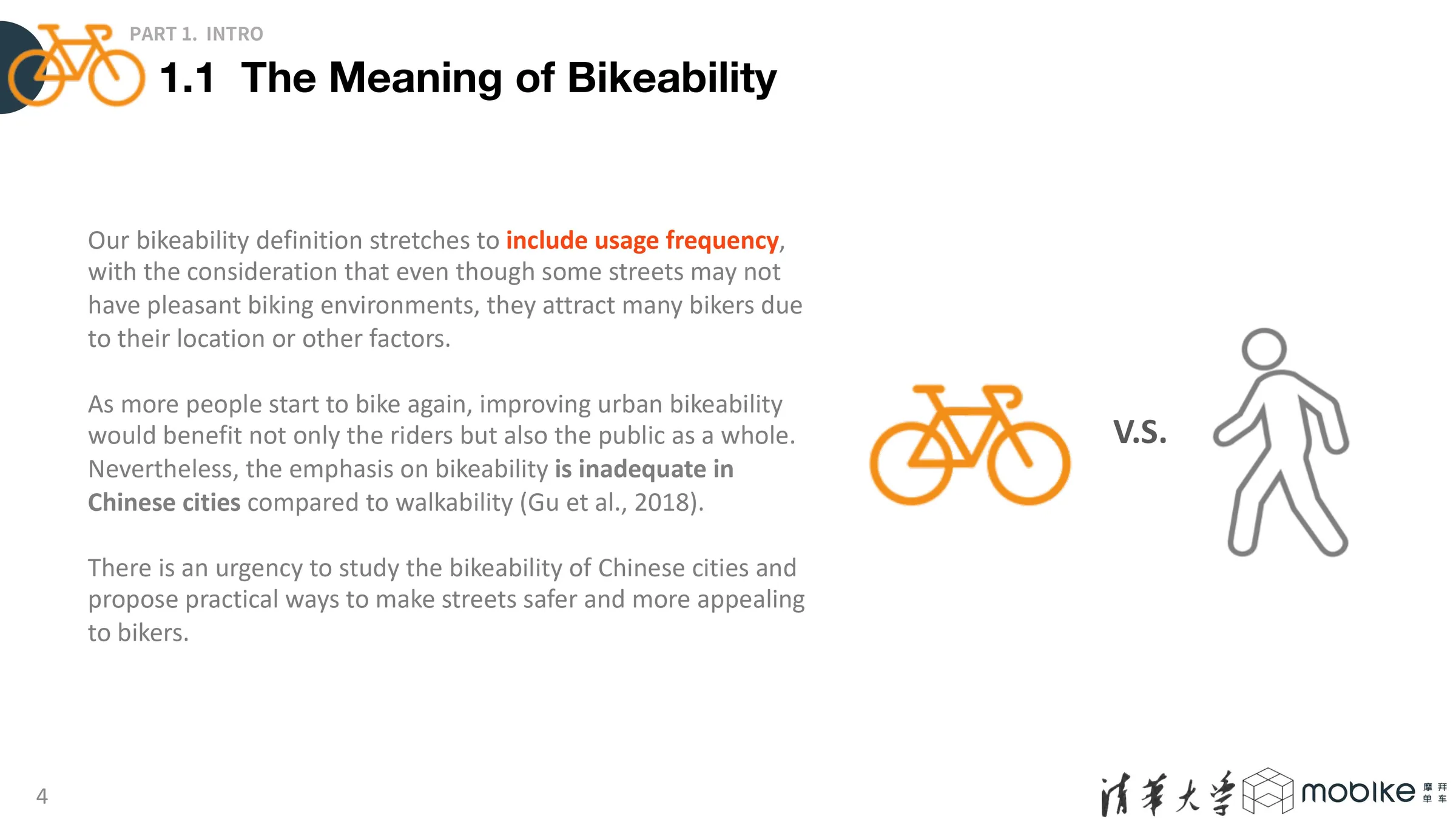
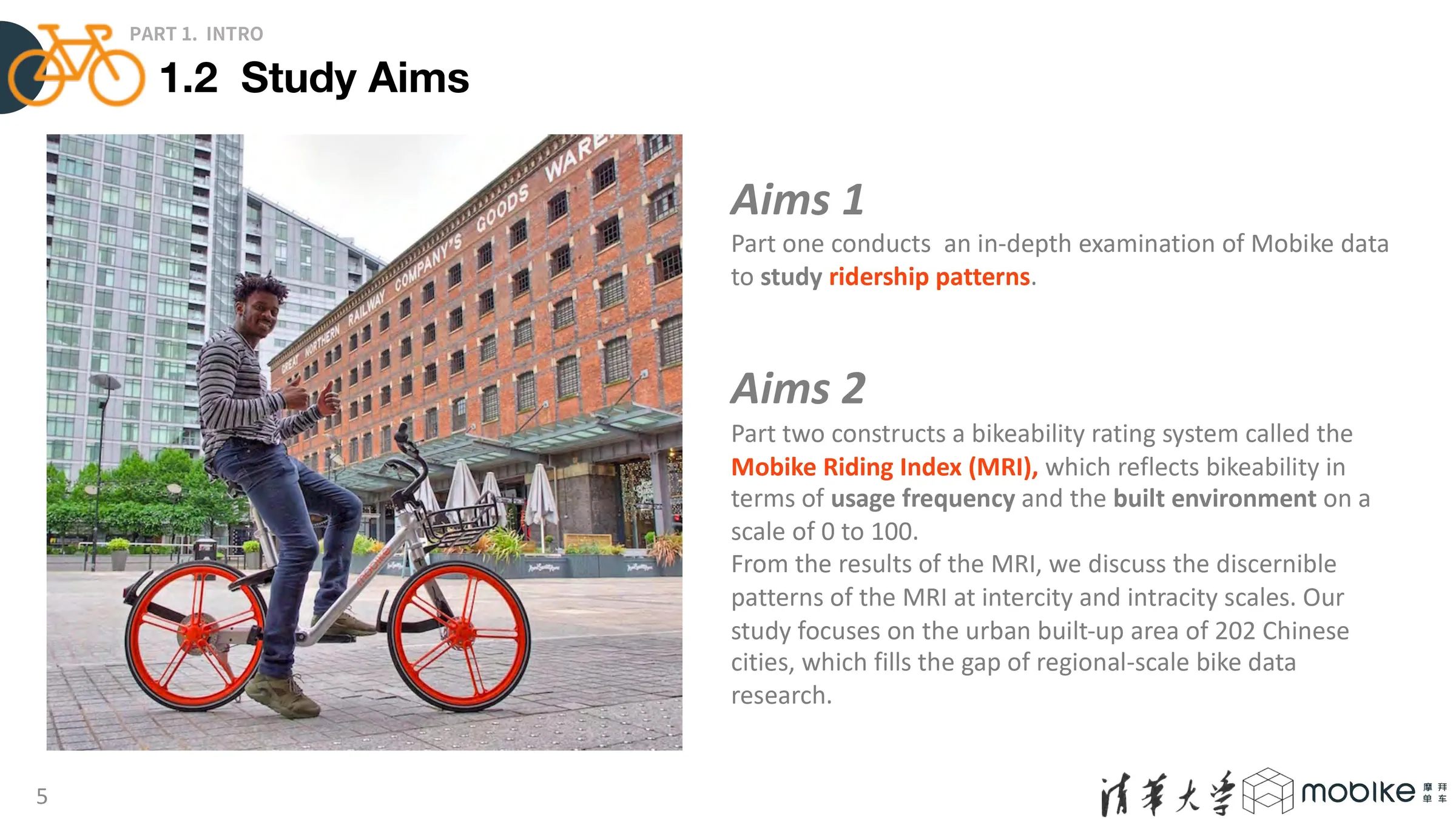
Shared bicycles solve the last-mile problem while doing something good for the city and for the people riding them. That has pushed researchers to ask a harder question: how bikeable is a city, really, and how do its residents actually cycle?
Method
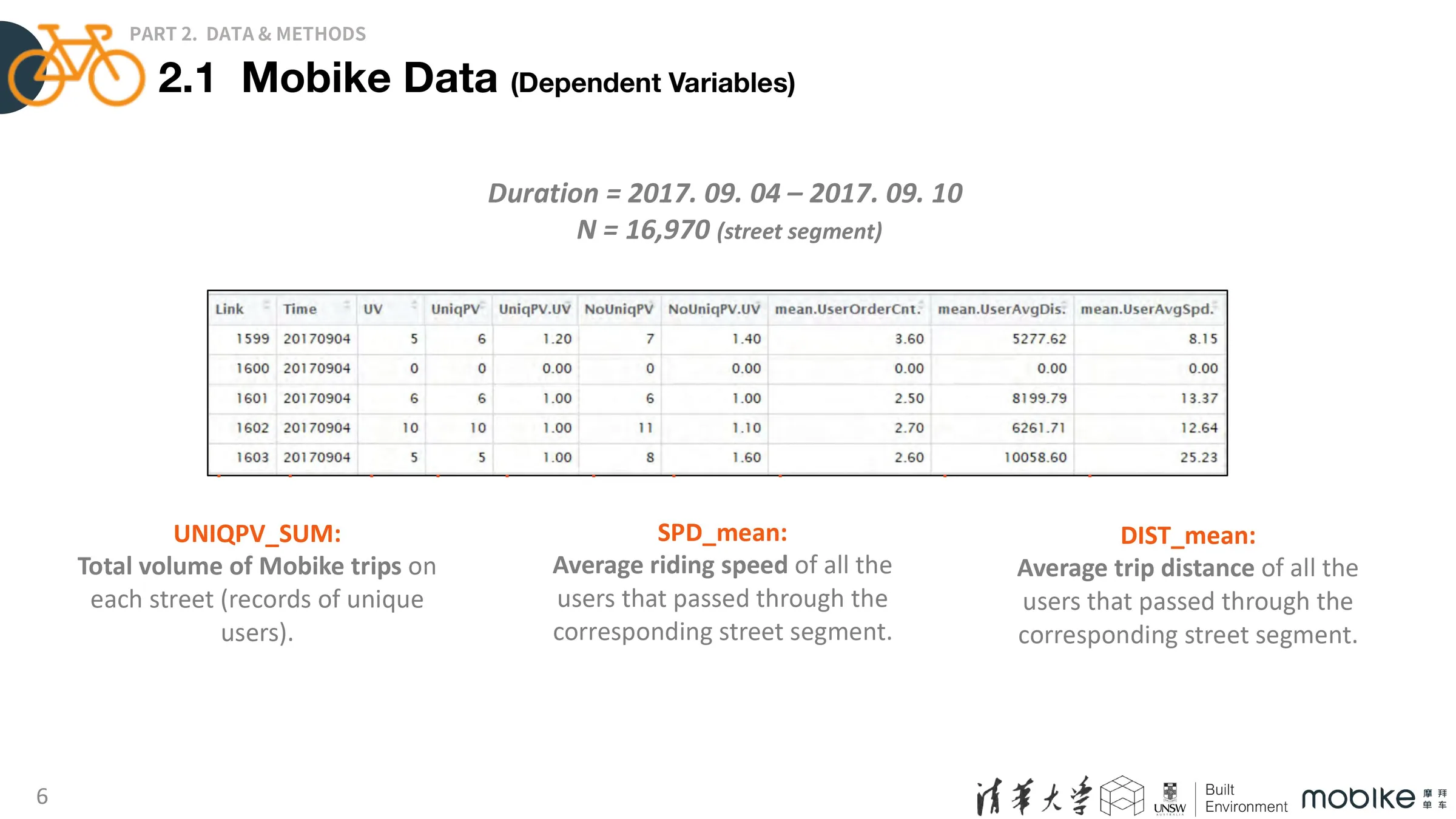
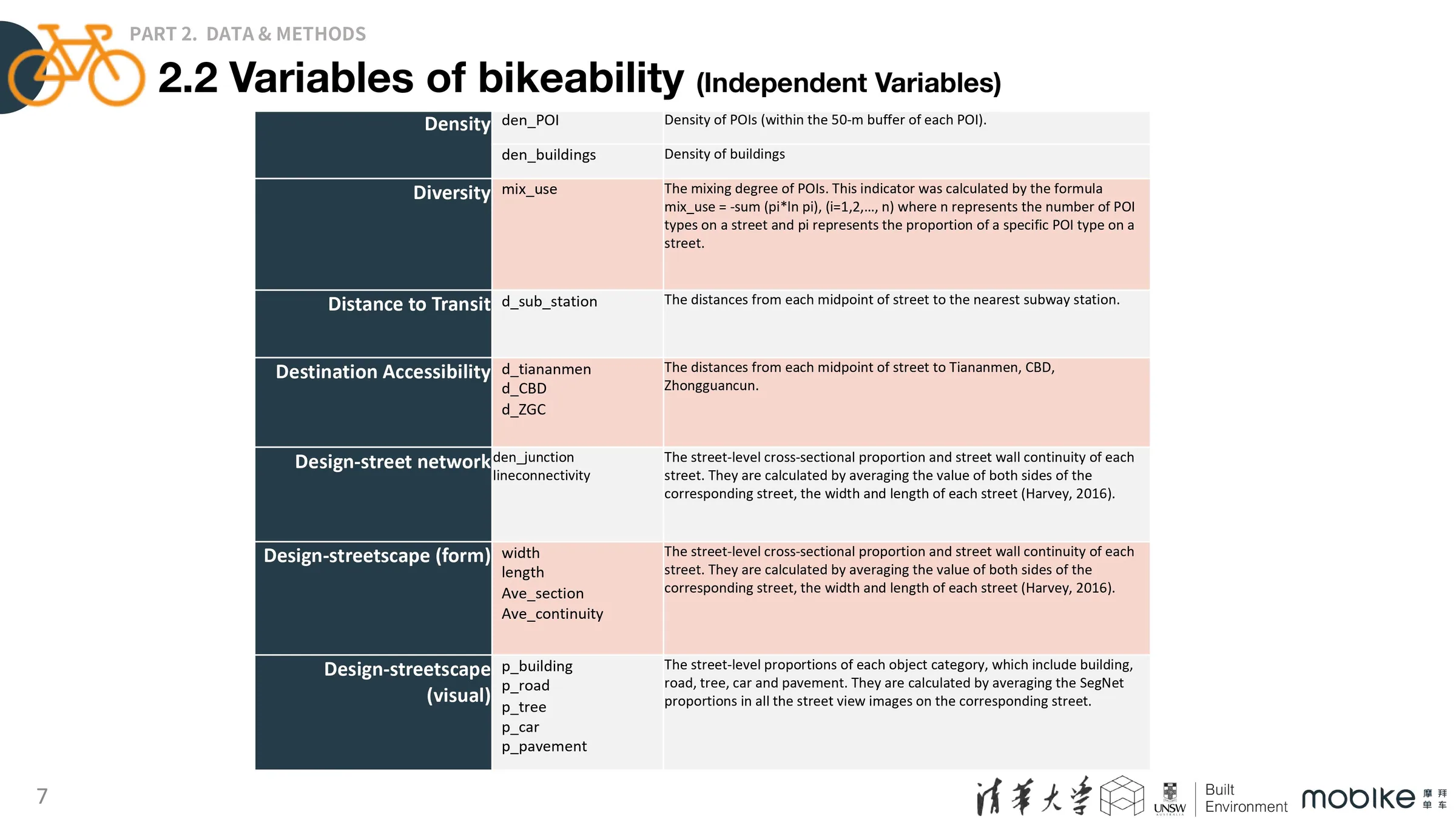
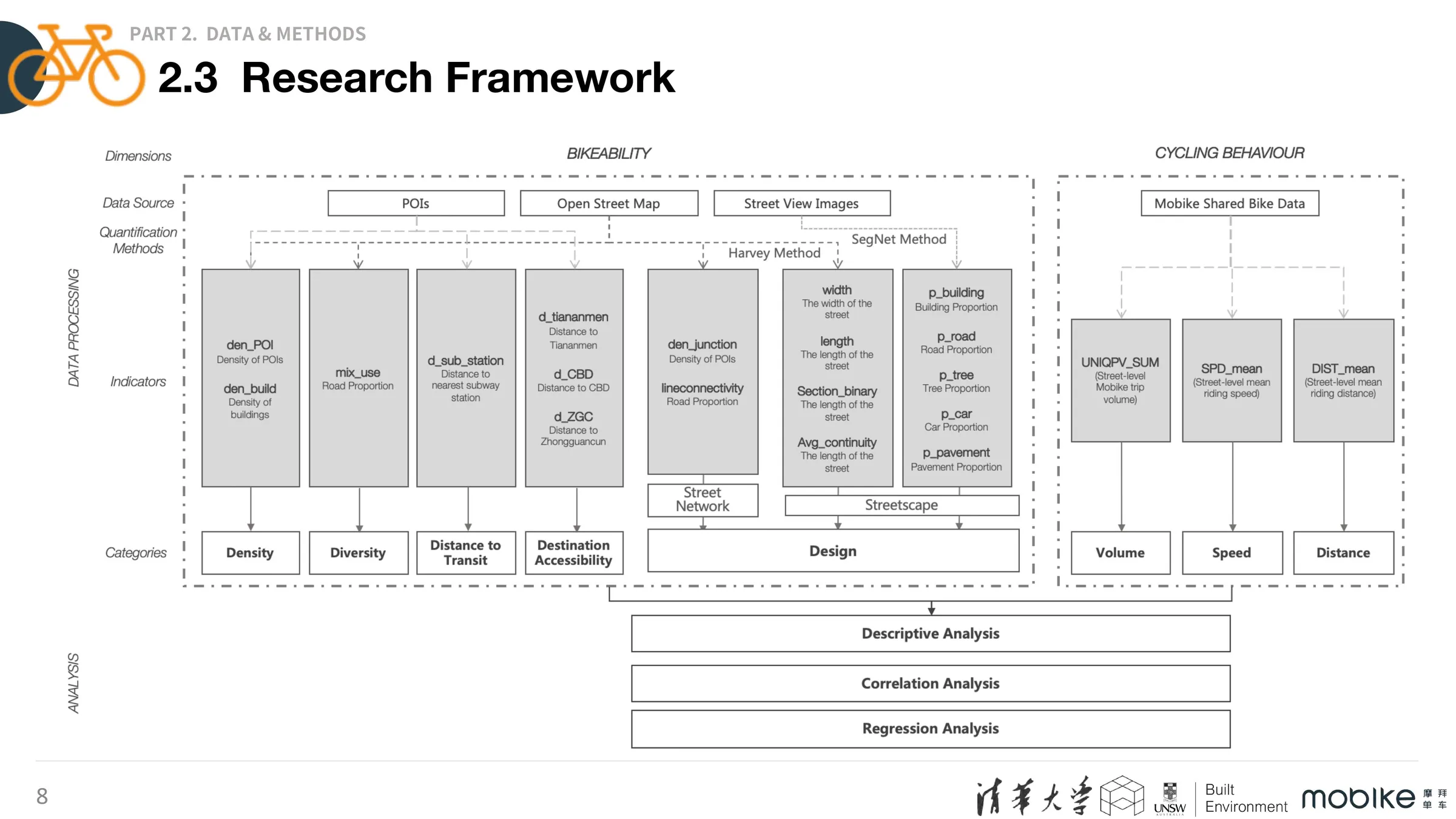
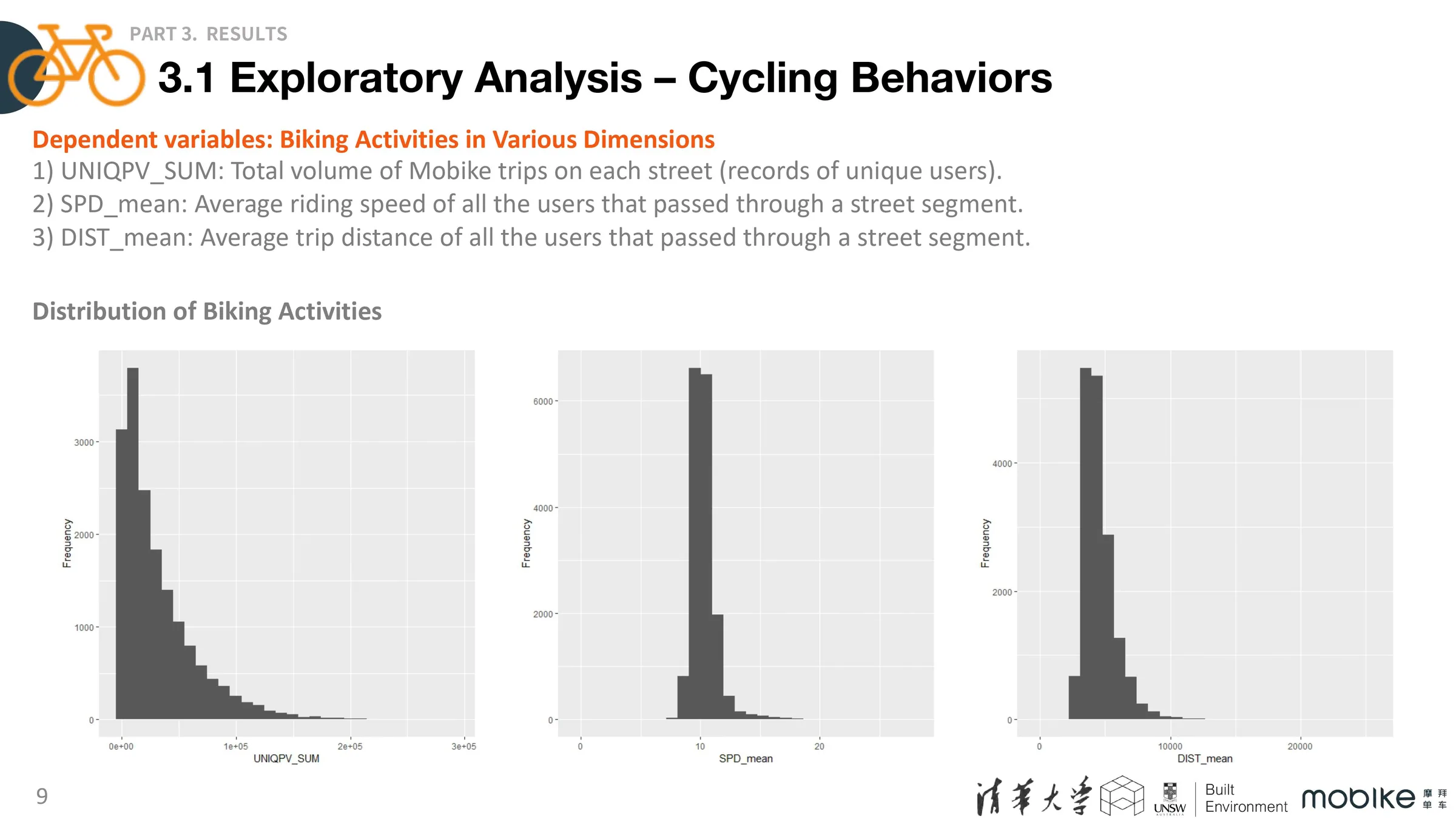
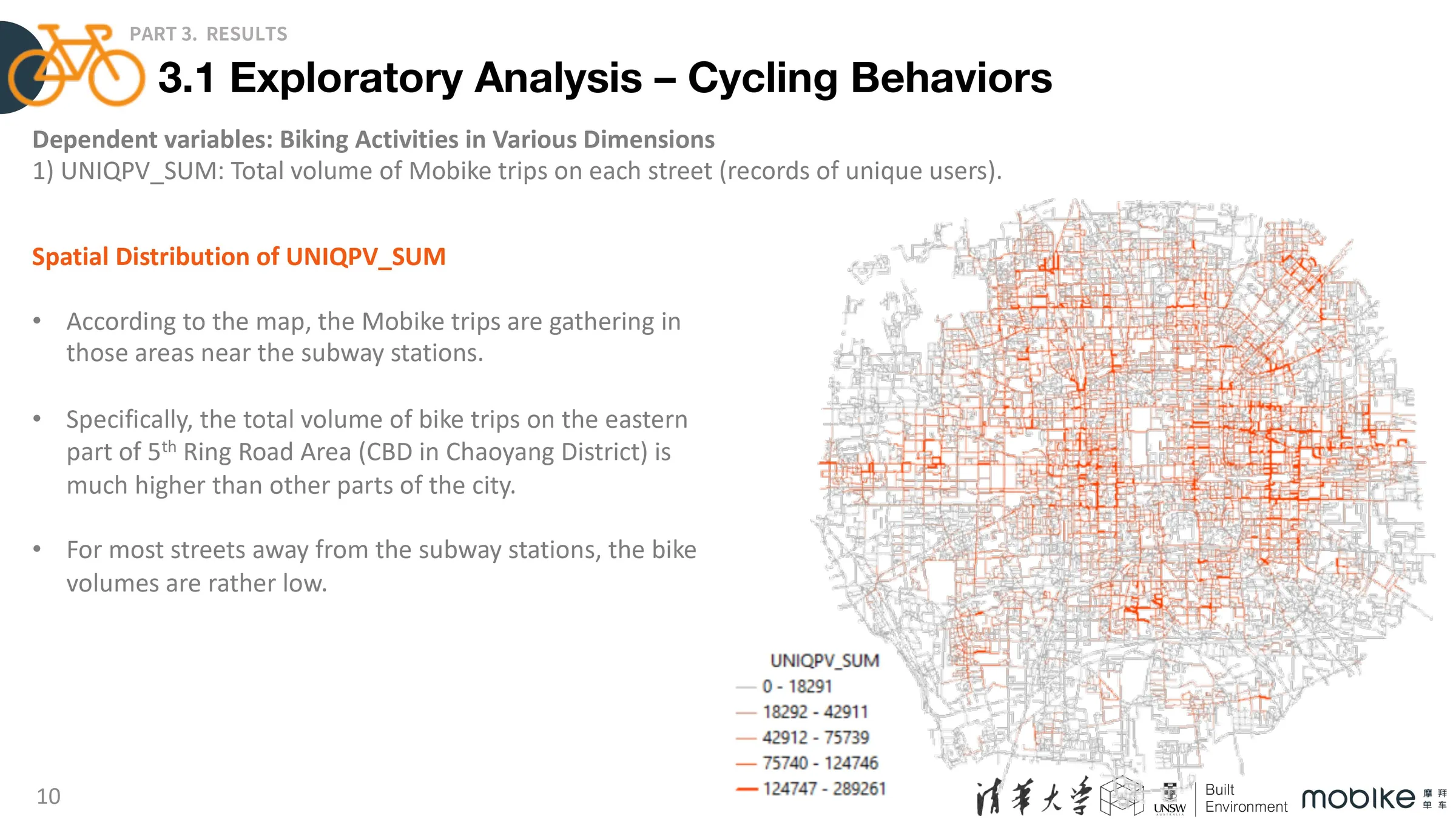
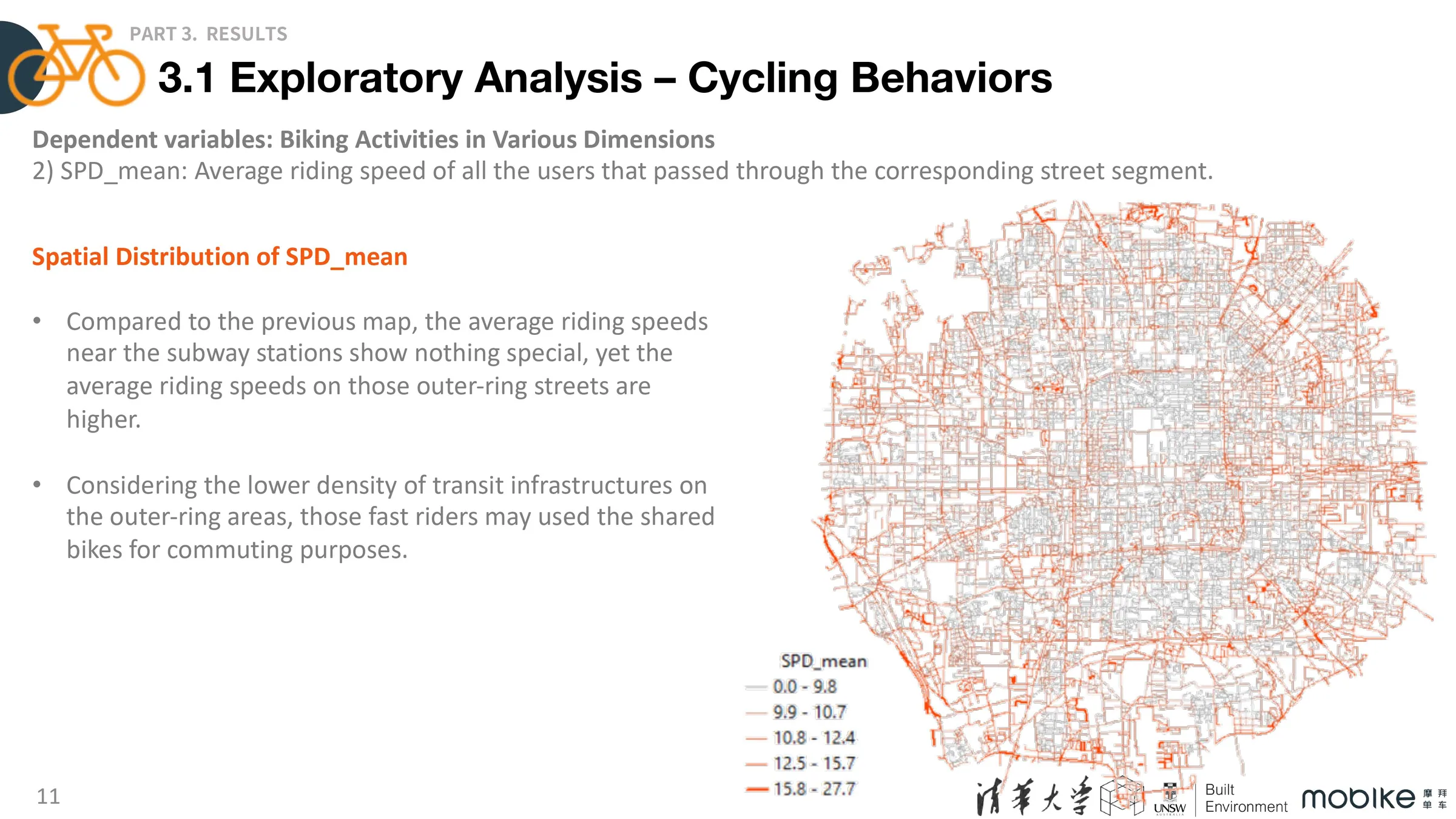
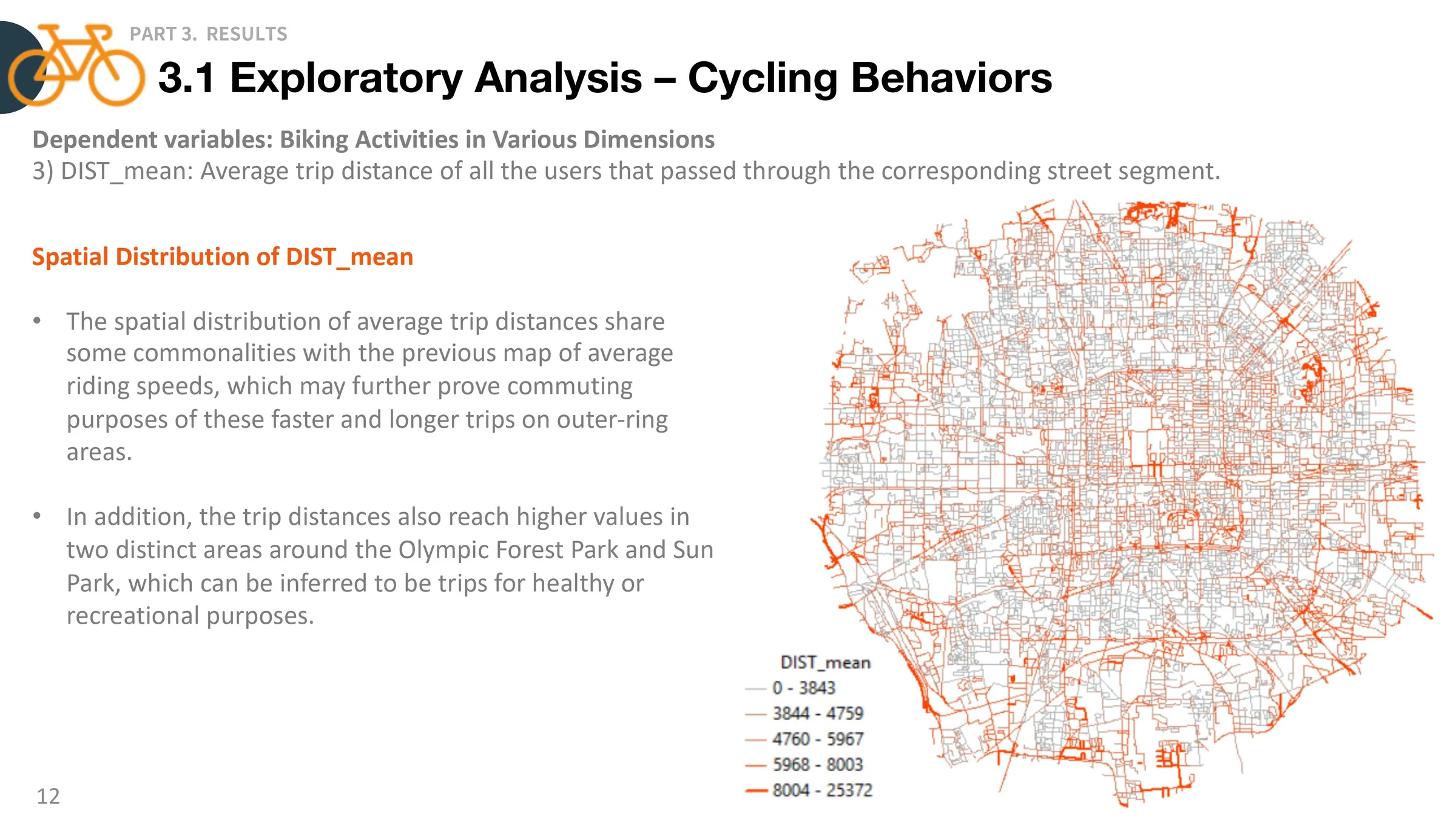
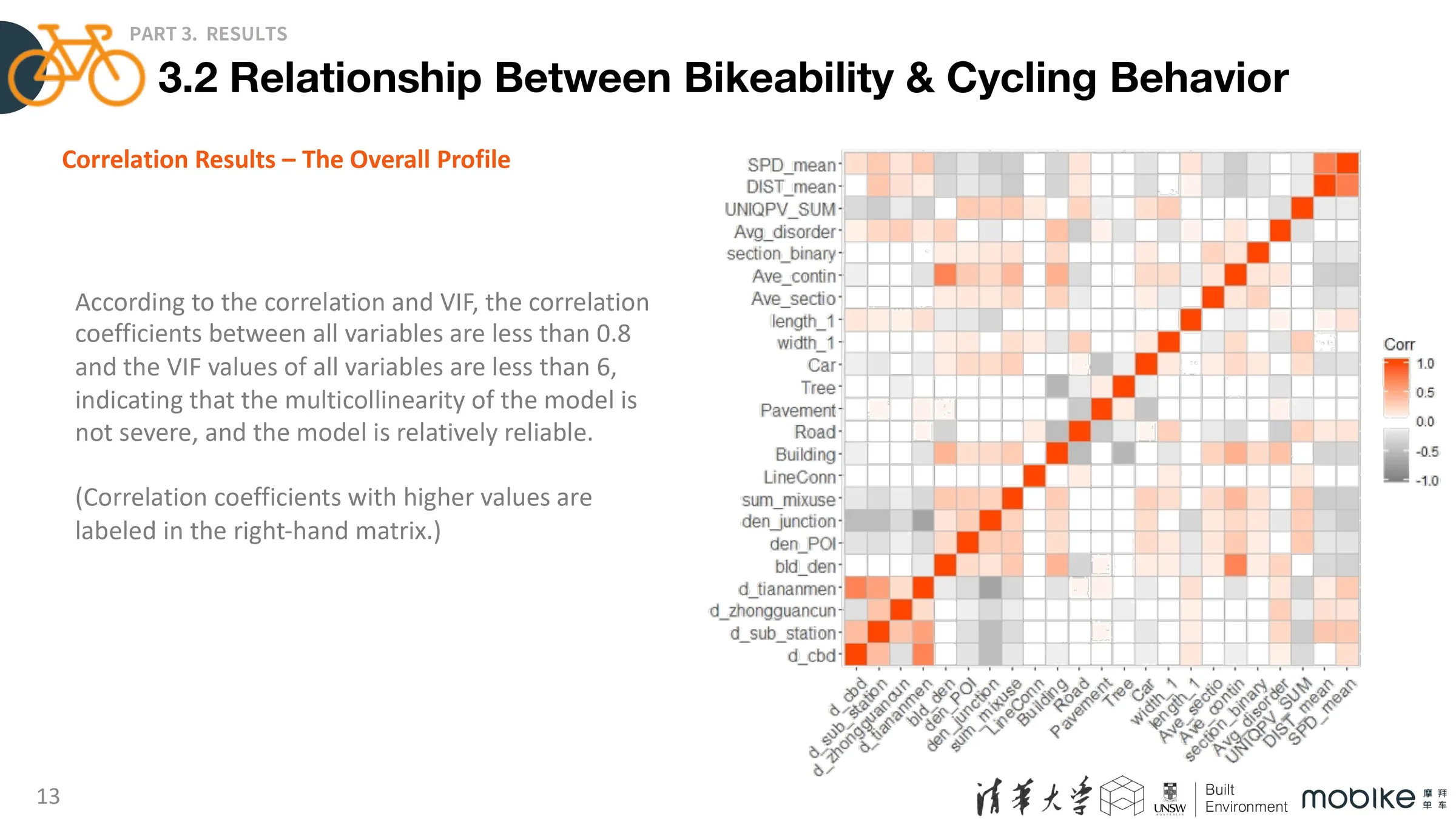
Partnering with Mobike, China’s largest shared-bicycle operator, the study used trip-level platform data. Three metrics — cycling flow, cycling speed and typical trip distance — described residents’ behaviour, then were joined to spatial data to compute a bikeability index for every block inside Beijing’s Fifth Ring Road.
Findings
Read together, the three behaviours draw a map of where Beijing is already being ridden. Cycling concentrates in the inner city and around metro stations, where trips are short and frequent; further out, the same streets carry fewer riders over longer distances. A street network that looks bikeable on paper is not always bikeable in practice, and the index makes that gap comparable block by block.
The full analysis — the index, its construction and its relationship to the built environment — is published as a chapter in Intelligence for Future Cities:
Zhang, E., Hsu, W., Long, Y. & Hawken, S. (2023). Understanding bikeability: Insight into the cycling-city relationship using massive dockless bike-sharing records in Beijing. In Intelligence for Future Cities (pp. 109–123). Springer. doi:10.1007/978-3-031-31746-0_7
- Year
- 2020
- Advisors
- Long Ying, Scott Hawken
- With
- In partnership with Mobike Technology
- Tags
- Shared Bike · Bikeability · Urban Mobility